Second part of our museum roundtable series, covering the 2nd level of ACM. First part of our series can be found here.
This article covers the 2nd floor of ACM, which is broadly split into Ancestral Rituals, Ancient Religion and Religious Arts.
Location: 1 Empress Place, Singapore 179555.
Opening Hours: 10am to 7pm from Sundays to Thursdays, 10am to 9pm on Fridays.
Entry Fee: For the Permanent Exhibitions, Free for Singaporeans and Permanent Residents. S$25 for Foreign Residents.
Ancient Religion – Buddha’s Relics
Heading onto the 2nd floor, was greeted by an exhibition of Buddha’s relics, a temporary exhibition ending on 26 March 2023. Full disclosure, I know close absolutely nothing about Buddhism.
So what are Buddha’s relics? Again, Google and Wikipedia come to the rescue. After his Buddha attained parnirvana, that is the release from the Karmic cycle of life and death, his body was cremated and the bones were made into relics, which are now believed to spiritual knowledge and teachings of Buddha.
What you see below are the artefacts extracted in 1898 from the Piprahwa Stupa, Uttar Pradesh which at that time was owned by a British landowner, W. C. Peppe.
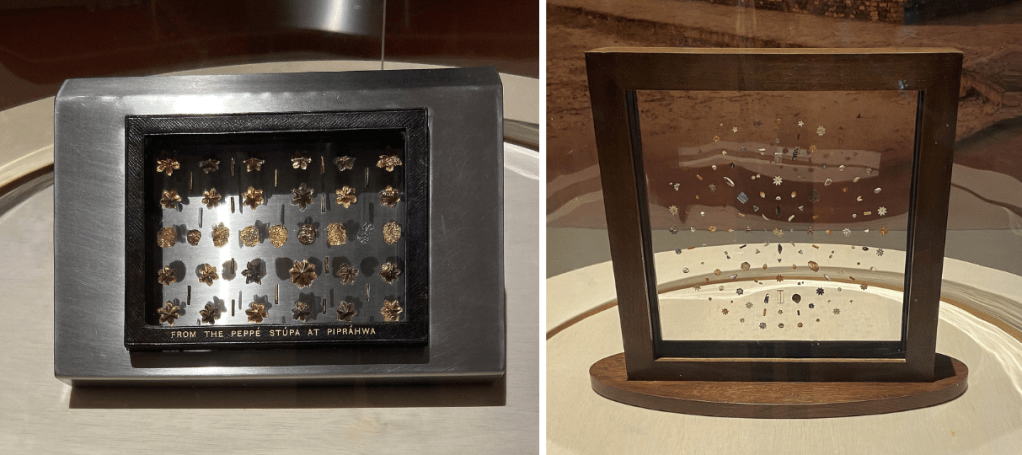
For anybody interested in the Buddhist faith, you may want to head to Buddha Tooth Relic Temple here in Singapore, which is located in Chinatown.
Ancient Religion – Main Gallery
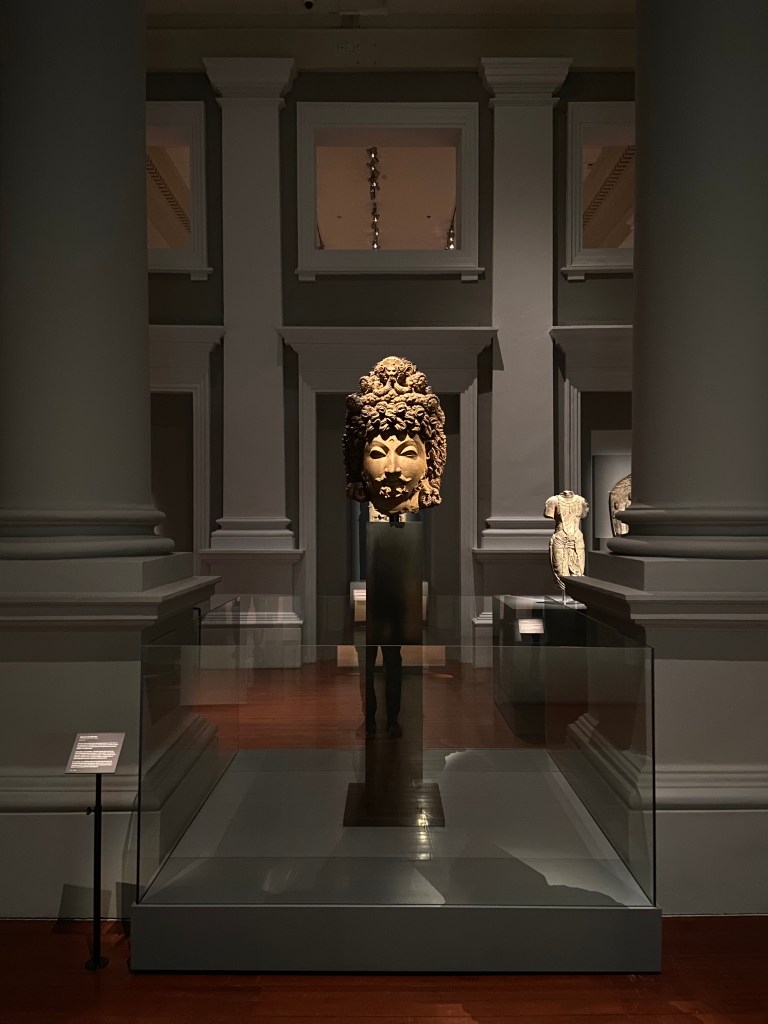
The 1st main gallery covers artefacts Hinduism and Buddhism. Why are these called Ancient Religion though? As you may know, the history of Buddhism and Hinduism traces back around 5000 years from today, around 3500 BC to 2800 BC, and share a common thread in the Karmic cycle of death and rebirth.
Entering the gallery, you’ll be greeted immediately by a bust of a Bodhisattva. While the definition of a Bodhisattva depends on the branch of Buddhism, generally a Bodhisattva is someone who has committed to obtaining enlightenment, that is to become Buddha.
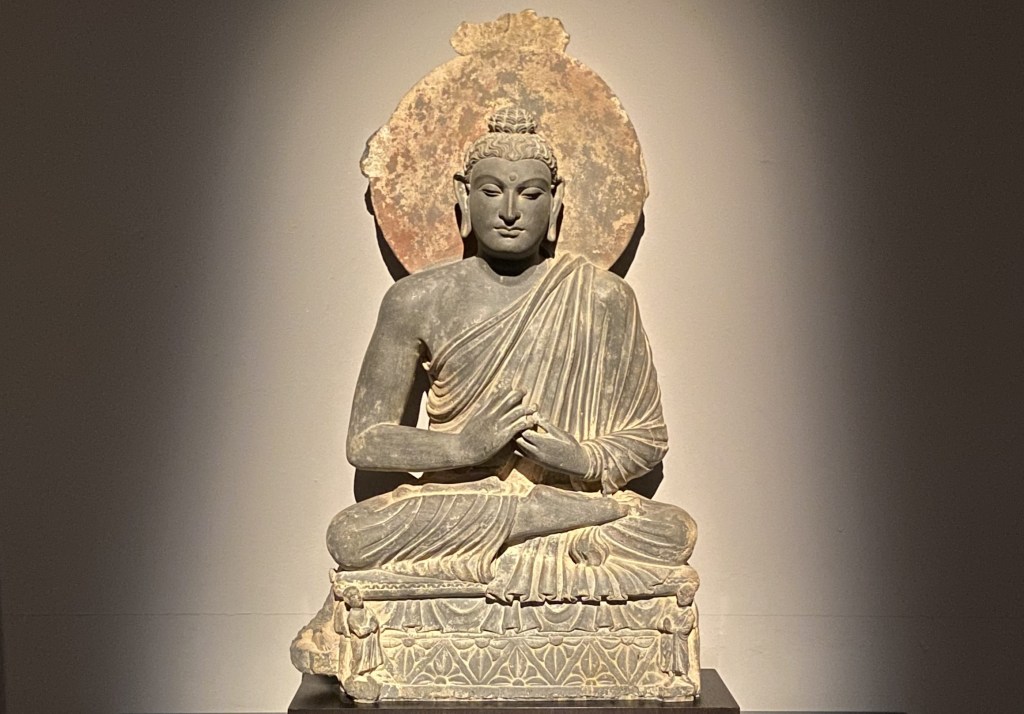
Among the many artefacts, one that caught my eye was a sculpture of Gautama Buddha in quiet contemplation. While this pose is something that many of us have seen before, one of the unique parts of this sculpture are the two figures at the bottom left and right of the status, looking upwards towards Buddha in adoration.
Walking deeper into the gallery, there are many sculptures covering these religions. In the forefront, we will see a sculpture of Ganesha that is instantly recognisable, the God with the elephant head. He is the known as the God of Beginnings in Hinduism and the remover of obstacles, and is worshipped by many, for example those who are starting new enterprises.

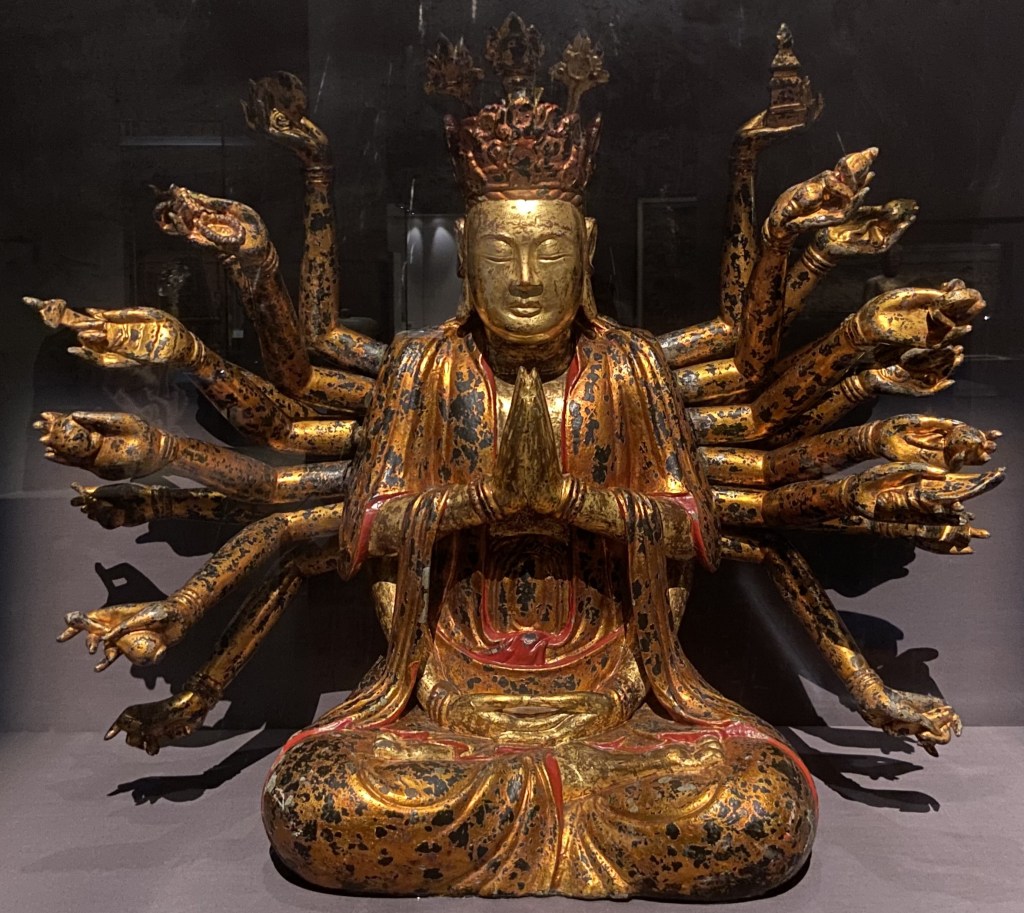
In this gallery, there is also a section that is dedicated to the Bodhisattva Avalokitsvara, who is better known as Guanyin (or Quan Am in Vietnamese), the God of Compassion. One of those on display is a bronze sculpture from Northern Vietnam which depicts the Thousand Arms Guanyin. Legend has it that with all the sadness in the world, Guanyin reached out to so many people that her arms split into a thousand pieces. Seeing her dedication, Buddha turned all of them into arms.
Christian Art Gallery
Heading out of the Ancient Religion gallery, the Christian Art gallery is on the right exit.
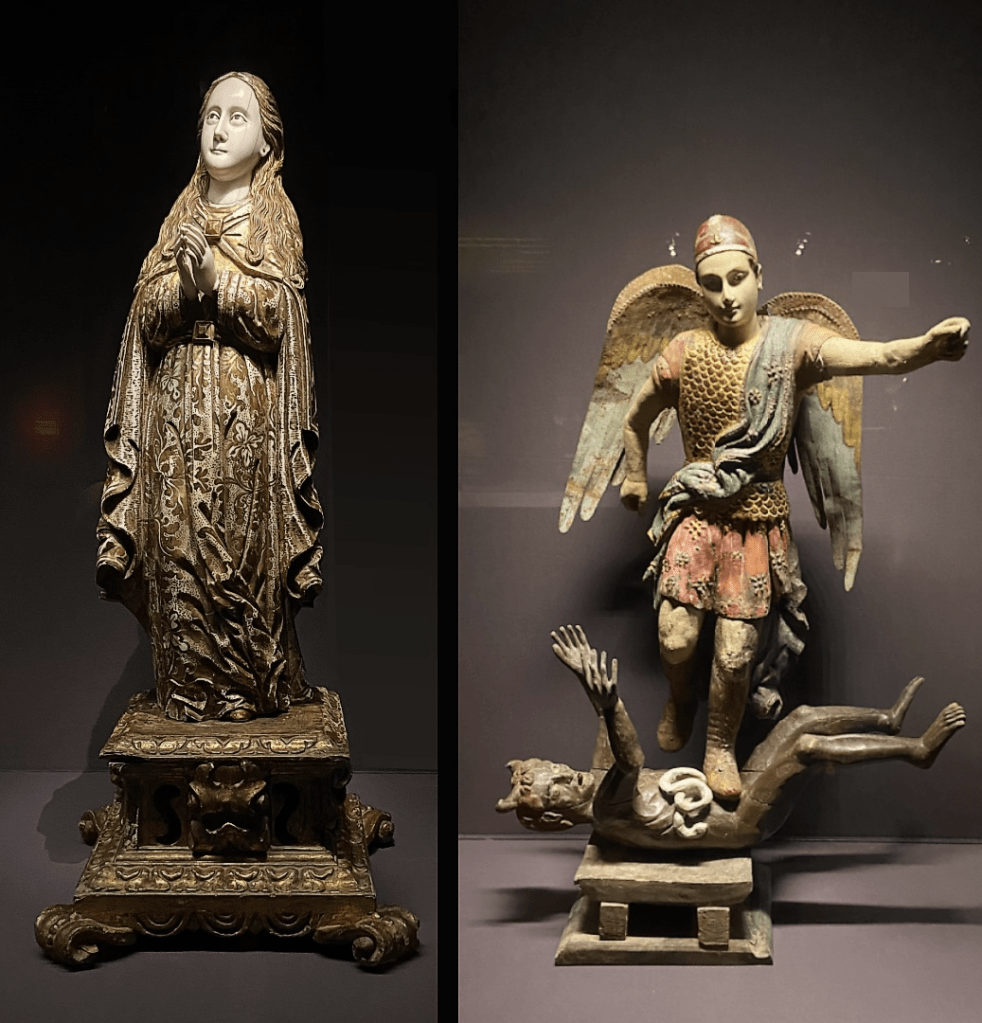
Within the Christian Art gallery, you will see a continuation of sculptures that you have seen in the previous gallery, including several sculptures of the Virgin Mary, Jesus and various saints. One of the sculptures of the Virgin Mary was unlike other images that you may have came across, in that the facial features are Asian-looking. This arises from the imagination of the sculptor, as the origin of this sculpture was most likely made in the Philippines during the 17th century.
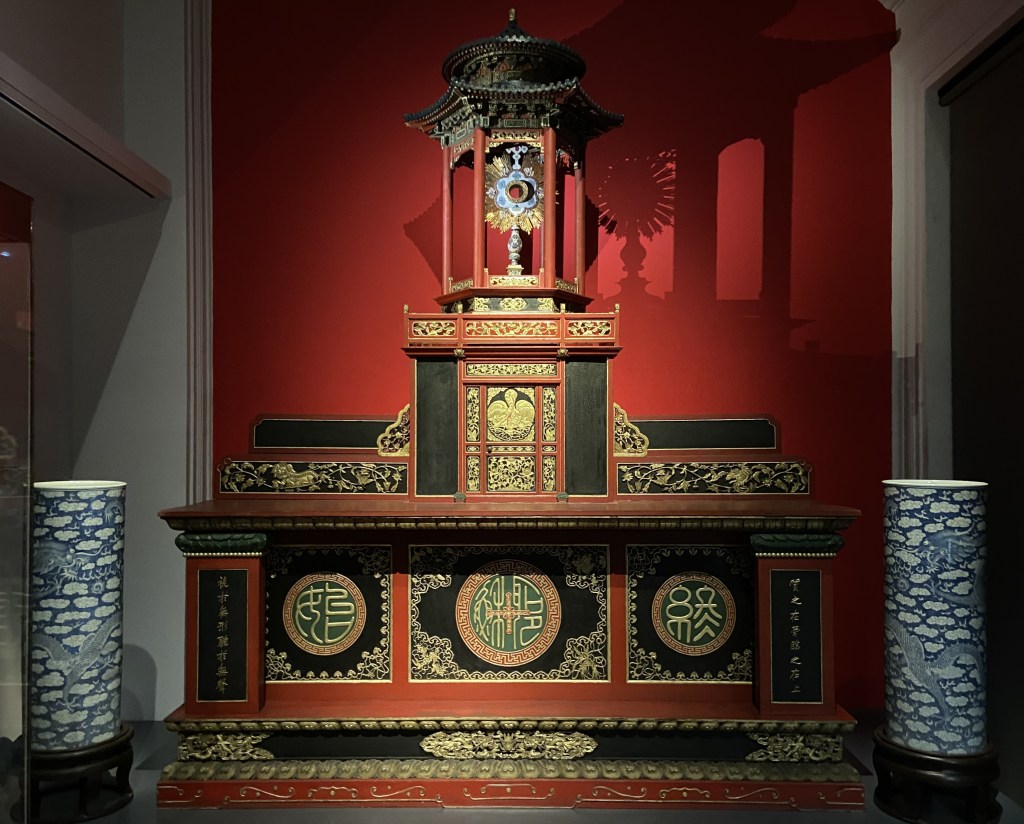
While sculptures shed some light on how religion was promulgated across the region while retaining local characteristics, the one item that thoroughly displays it is the altar which at first glance could be mistaken for a Chinese ancestral altar. It retains the red colour that is associated with Chinese culture, but the monstrance is prominently displayed.
Islamic Art Gallery
On the opposite side of the Christian Art Gallery is the Islamic Art Gallery, accessible if you exit through the left of the Ancient Religion Gallery.
One of the tenets of the Islamic faith is the worship of God alone. Thus, there are few images or figures of humans to avoid idol worship, which is demonstrated within this gallery as you will see a lack of sculptures as compared to what we have seen through our journey in the Asian Civilisation Museum.
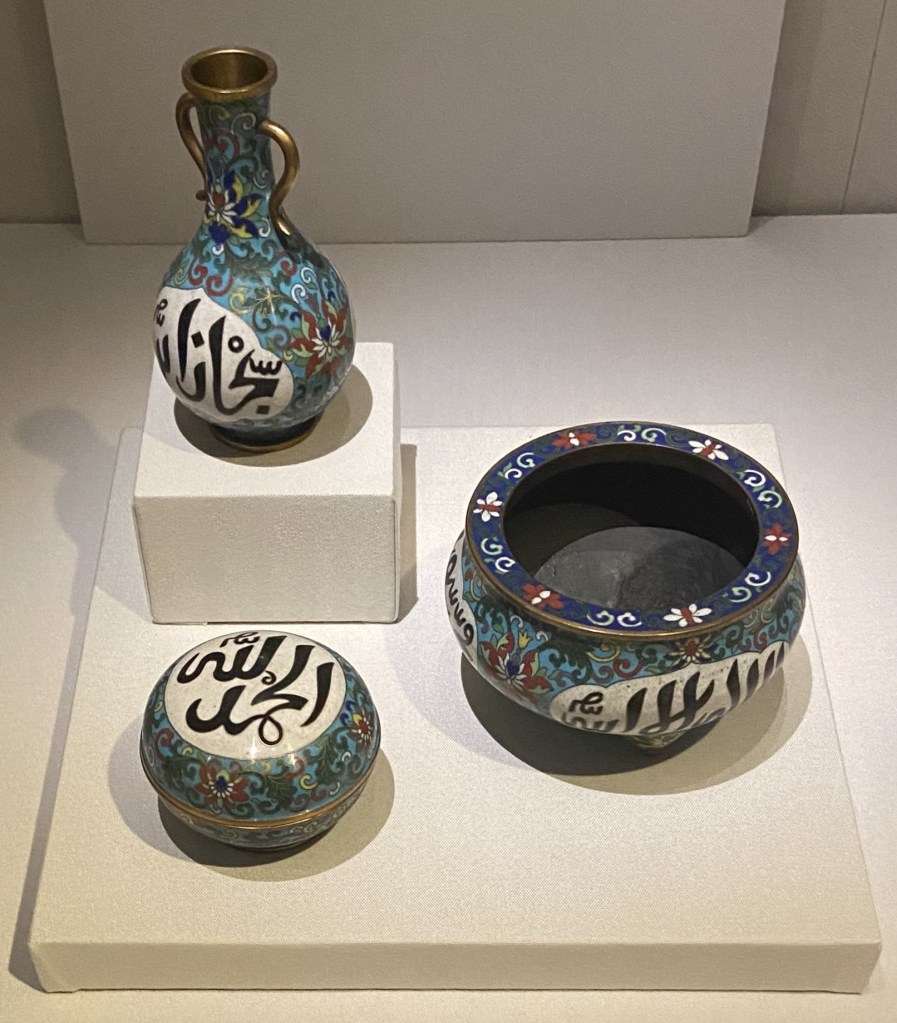
Following on from seeing a Chinese altar in the Christian Art gallery, there is also indication how the practice of Islamic faith was mixed with local tradition as evidenced by the prayer set that used by the Huis of China.
The prayer set us made up of an incense burner, a covered box to hold unburnt incense and a vase. This would be very familiar to many Chinese which see the same items on the ancestral altars. For this set, the Arabic inscriptions are praises to God.
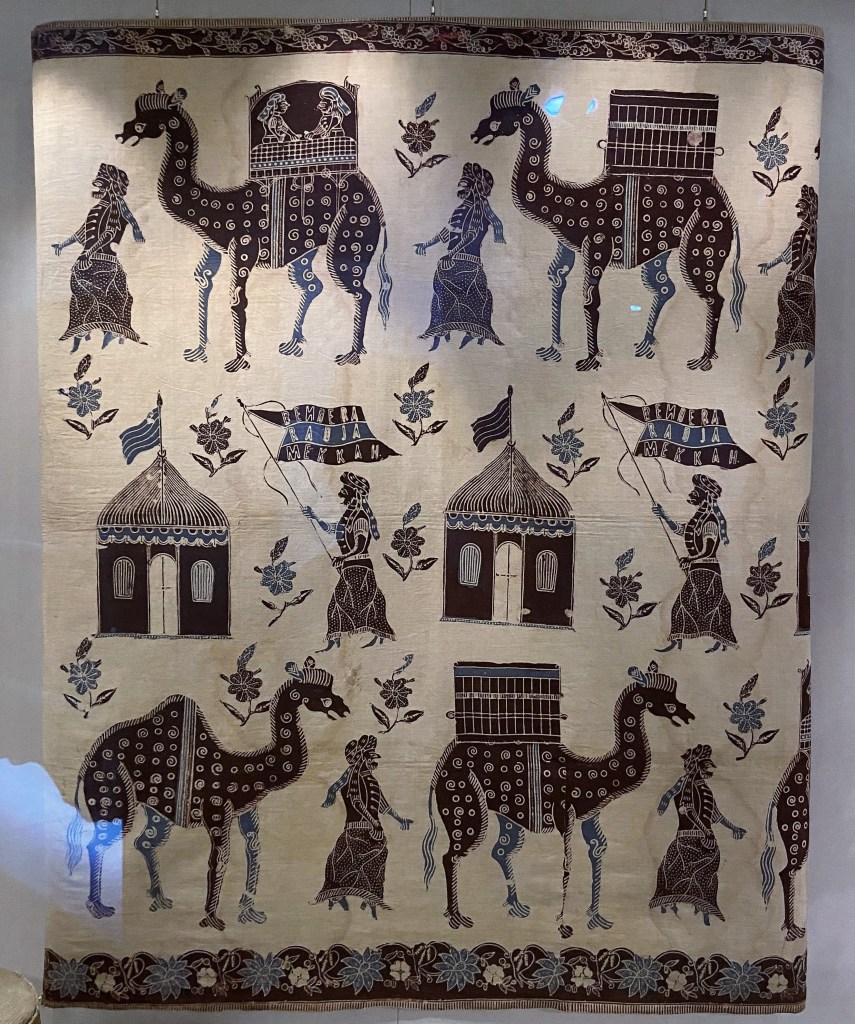
In the gallery, we also see a depiction of the Hajj, which is one of the five pillars of the Islamic faith. Each Muslim has to perform the Hajj at least once in their lifetime, travelling to Mecca in Saudi Arabia. Below is the depiction of the Hajj, as you can see “Mekkah” clearly stated.
The last item that could be interesting is a scroll painting of the Ashura, one of the key moments of the fledgling Islamic faith, which resulted in the split of the Muslim faith between Sunni Muslims and Shia Muslims. Ashura is an important day for Shia Muslims, which marks the day of the Battle of Karbala and the martyrdom of Hussein, the grandson of Prophet Muhammad, in 680 AD. The battle arose due to disagreement over the succession of the caliph. For more information on the Sunni-Shia divide, read more here.

Ashura is also observed by Sunni Muslims through fasting to remember this day. Also, fasting by Sunni Muslims is done in rememberance of Moses leading the Israelites out of Egypt. While this may be curious to the casual observer, Muslims, Christians and Judaism traces back to the same beginning and are collectively called the Abrahamic faiths.
I hope you enjoyed the trip through the second level of the Asian Civilisations Museum. There are two additional galleries covering Ancestors’ Rituals and Scholars that you should also view when you make the trip down to the museum.
Have fun viewing the various artefacts that trace the history of Asia!
 Sims Avenue