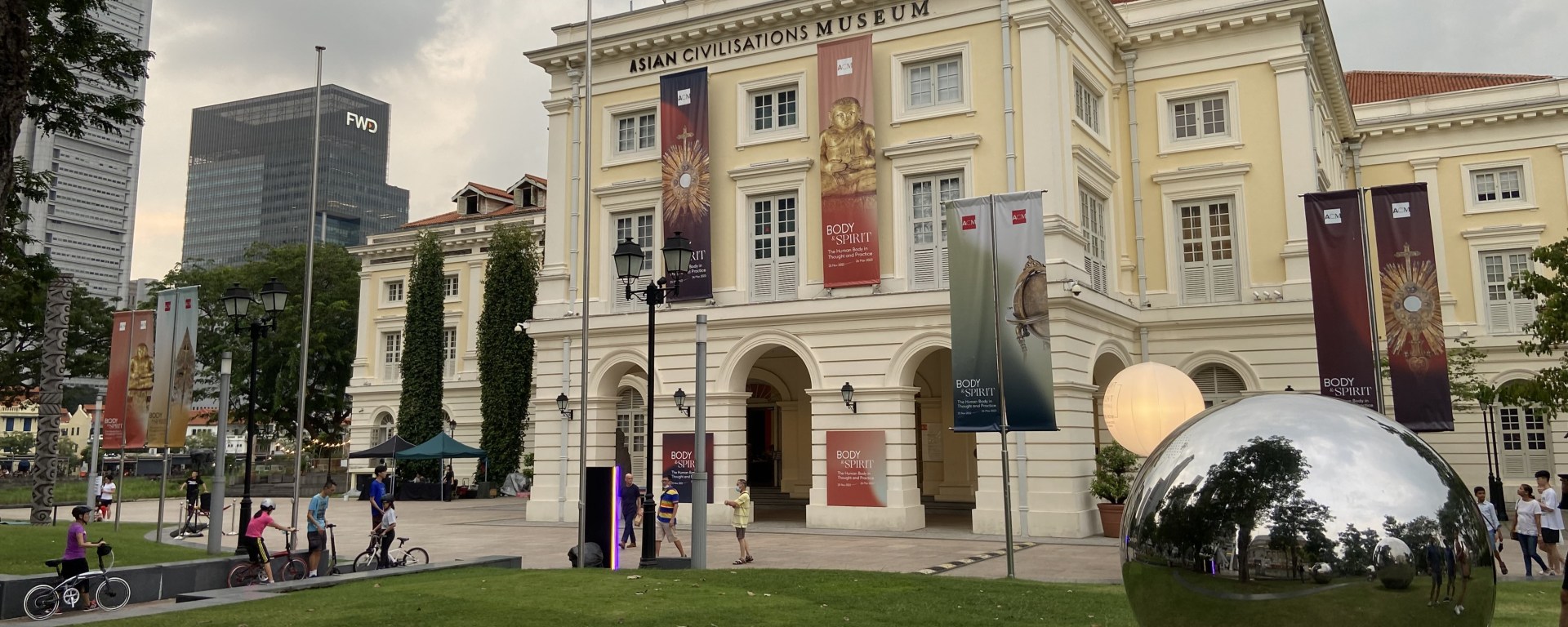
Second part of our museum roundtable series, covering the 1st level of ACM.
We head to the Asian Civilisations Museum today, as part of our museum roundtable series. As the name suggests, the galleries cover Asian history all the way back to the 800s.
Location: 1 Empress Place, Singapore 179555.
Opening Hours: 10am to 7pm from Sundays to Thursdays, 10am to 9pm on Fridays.
Entry Fee: For the Permanent Exhibitions, Free for Singaporeans and Permanent Residents. S$25 for Foreign Residents.
This article covers the 1st level of the Asian Civilisations Museum, which relates to the history of Asia told through paintings and trade artefacts.
Tang Shipwreck Gallery
The tour starts off with the Tang Shipwreck (also known as the Belitung Shipwreck), which is a shipwreck of an Arabian ship in 830 near Belitung Island, located halfway between Singapore and Jakarta. It is the largest collection of Tang Dynasty ceramics found outside China.
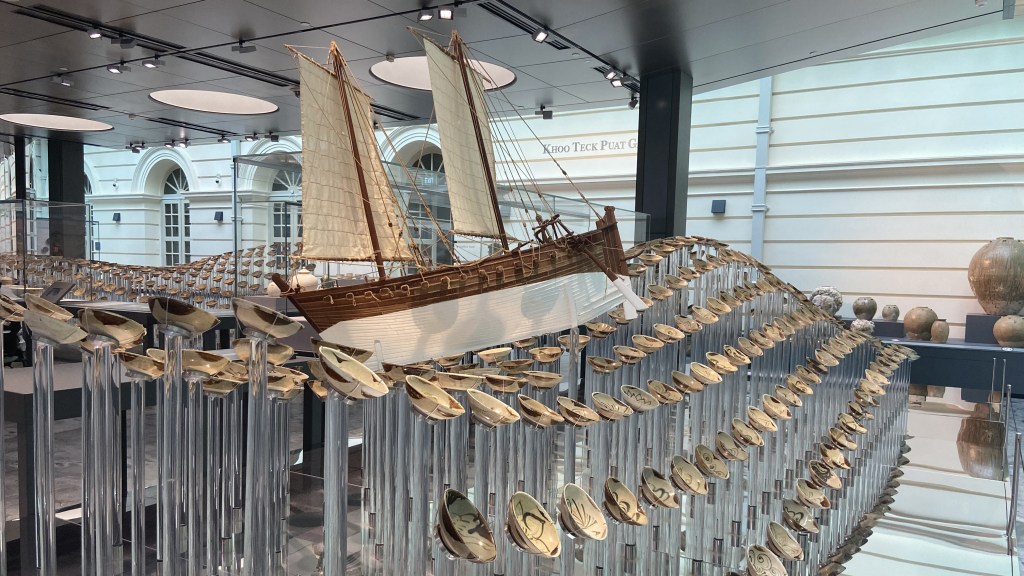
The large number of ceramics found on the ship indicates that even back in the 9th century, these ceramics were produced on an industrial scale for active trade between China and the Arabian Peninsula. Further study of historical trade routes shows that some of these ceramics were produced in Chang’an (present day Xi’an), which is also where the Terracotta army of Qin Shi Huang was found.
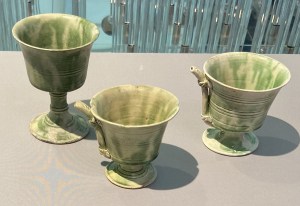
While many artefacts displayed are what you expect to see, there was one item that left me totally dumfounded – presenting to you the stem cup.
My first thought was if the handle for the cup broke off. Well, firstly, the spout that looks like a handle is actually a straw-like design to drink through (+1 for environmental awareness) but further, it is hypothesized based on records from the Song Dynasty that these are nose drinking cups, that is you drink through the straw through your nose (-1 for ridiculousness).
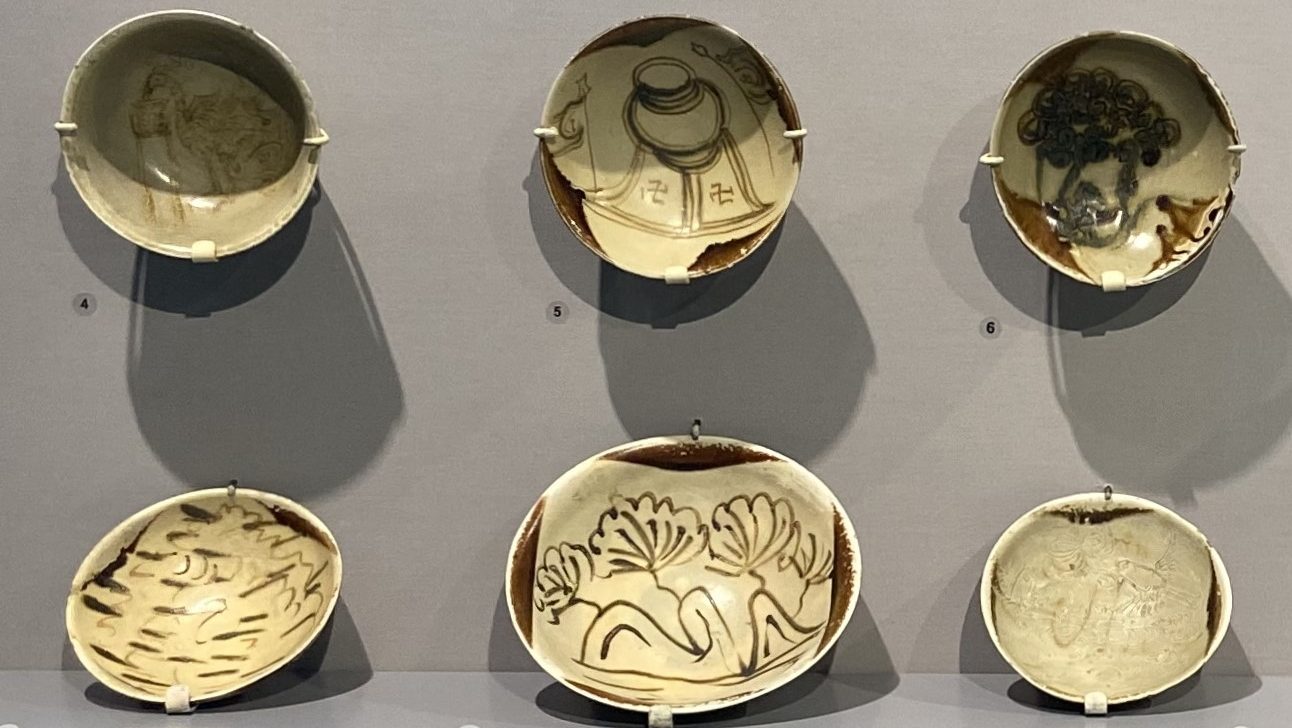
Also, one of the more curious things that I could not figure out was how these kilns were able to produce a variety of different designs for the exports back in the 800s, which indicated that despite industrial scale production, additional work was done for each item before export.
Maritime Trade Gallery
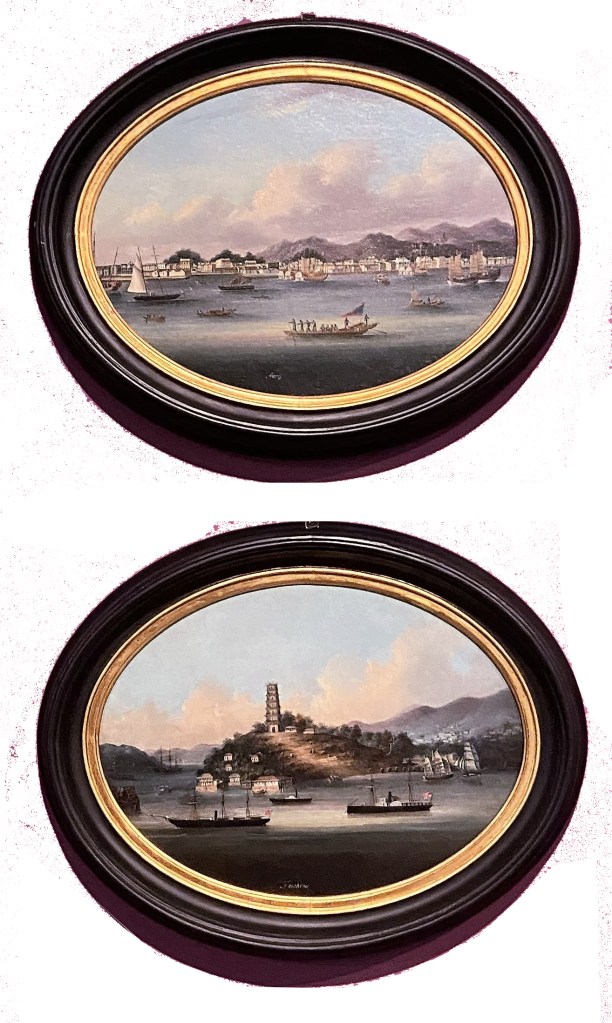
Exiting the Tang Shipwreck gallery via the side door brings you to the Maritime Trade gallery, which have both paintings and artefacts from years gone by.
Firstly, the paintings.
The paintings on the right show the landscape of the ports of Fuzhou and Amoy (present day Xiamen) in the 1850s. For many ethnic Chinese Singaporeans, these paintings provide an insight of the view our ancestors saw prior to immigrating to Singapore back in the 1800s, and in many cases the last view they ever saw of mainland China, having never headed back to their hometown after setting up roots here.
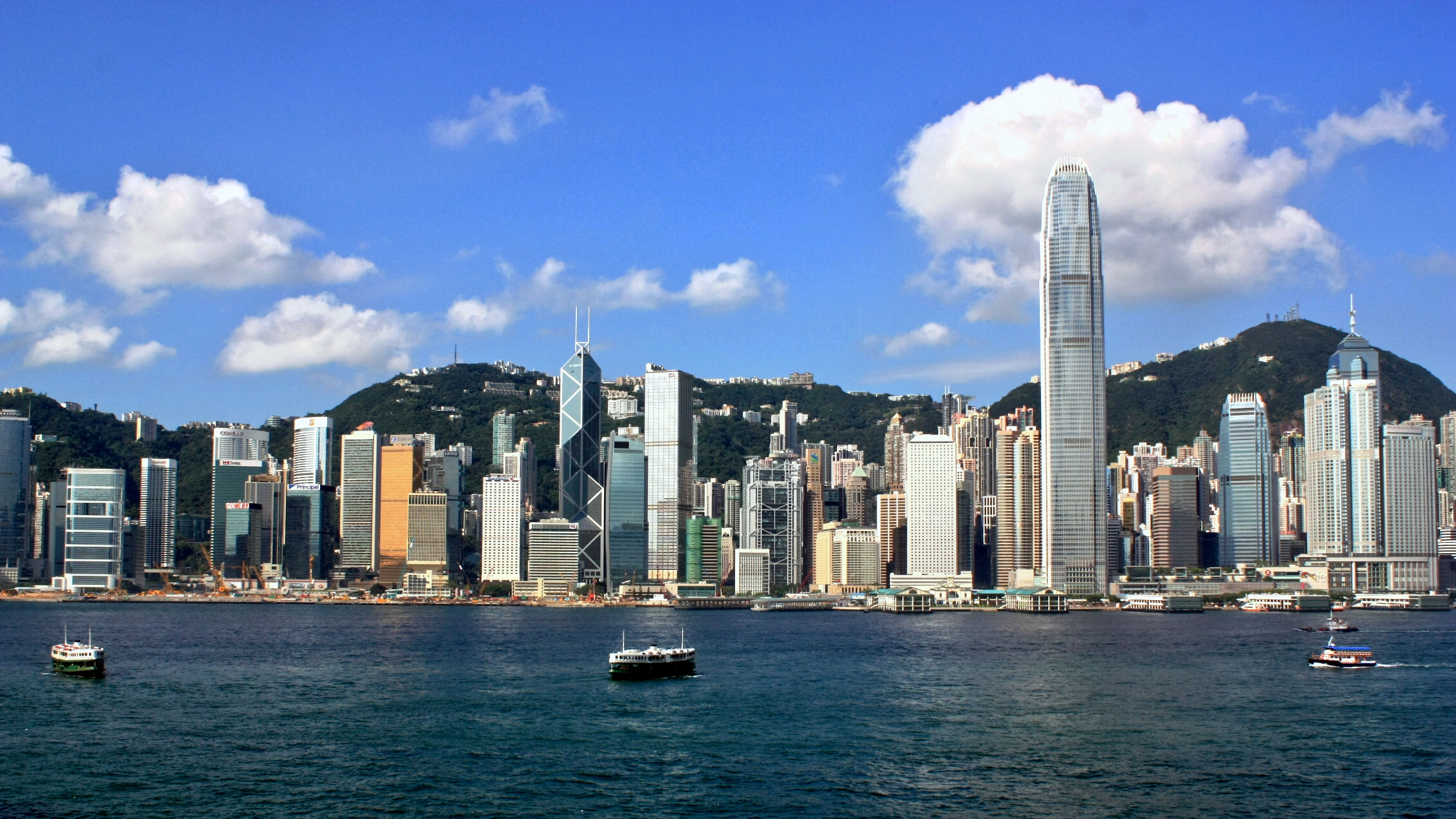
For the other painting that caught my eye, am pretty confident that most well-travelled Asians will recognise the landscape. In fact, in my last trip to this place, standing at probably the exact same spot where the painting was done, you’ll see a very similar landscape with skyscrapers added in.
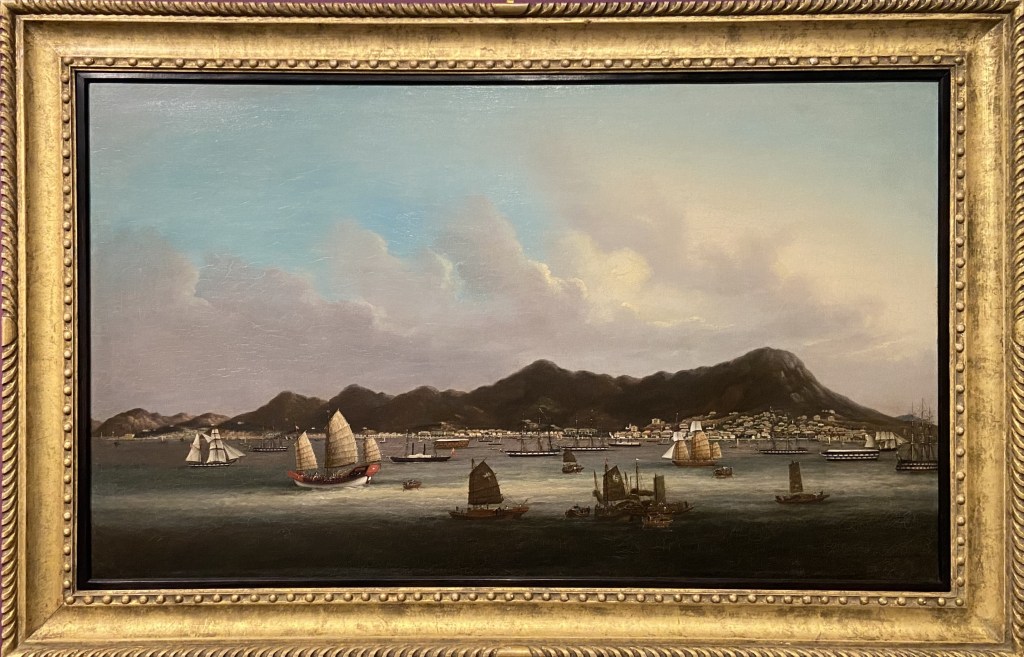
Yes, that is the view of Hong Kong Island from Tsim Sha Tsui, after being ceded to the British in 1841. Drawing out a photo taken by a Wikipedia user in 2009, you’ll see the very same backdrop.
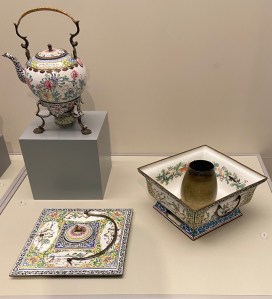
Going beyond the paintings, one of the artefacts displayed fits perfectly into the timing of my visit just prior to Lunar New Year. Presenting to you the version of the hotpot during the Qianlong period (1736 to 1795) of the Qing Dynasty. The Qianlong Emperor is known to be a big fan of hotpot although the history of hotpot can be traced back further to the time when the Mongols were all-conquering.
If you are a very big hotpot fan, stay tuned for one of my recommendations for hotpot in Singapore which will be covered in a later series.
Historically, porcelain and ceramics were manufactured in China since the Tang Dynasty (as seen in the earlier Tang Shipwreck gallery).
However, with the rise and fall of the different Chinese dynasties in the past millenium and the wars that accompanied it, there were periods of minimal exports of porcelain, with the change from the Ming to Qing in the 1640s being one of the largest disruptions. In the absence of Chinese exports during that period, Japan and continental Europe filled in the gap.
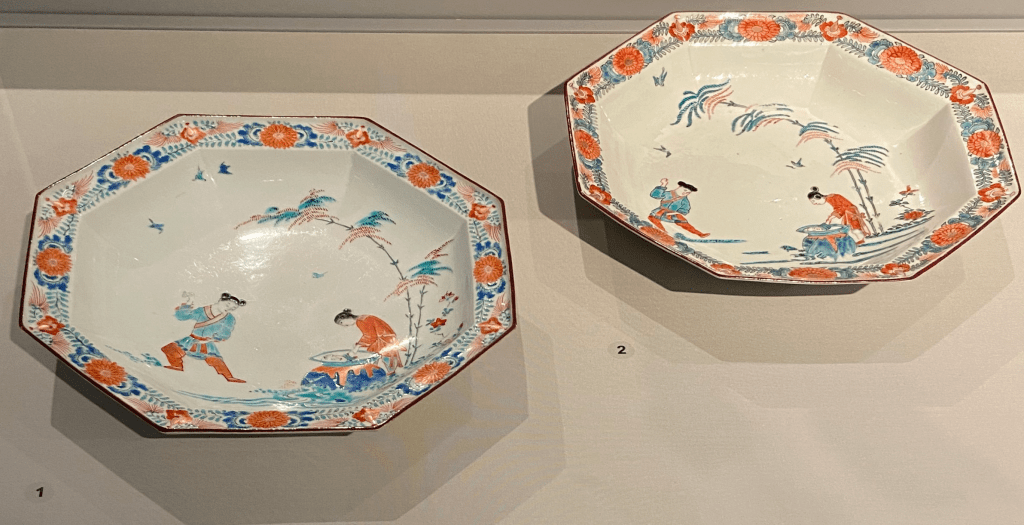
While the kilns that produced the above designs are located halfway across the world from each other, you’ll notice that the designs are similar, indicating that the designs that came out of Japan were also widely received in Europe. Imitation is the best form of flattery.
In fact, it was not till the 1700s that Europeans managed to replicate the production of Chinese porcelain.
Singapore Archaeology Gallery
Onto the last gallery on the 1st level of the Asian Civilisations Museum, which displays artefacts recovered in Singapore during excavations, which further justifies the notion that prior to the British arriving in 1819, there has historically been significant trade activities occurring in Singapore.
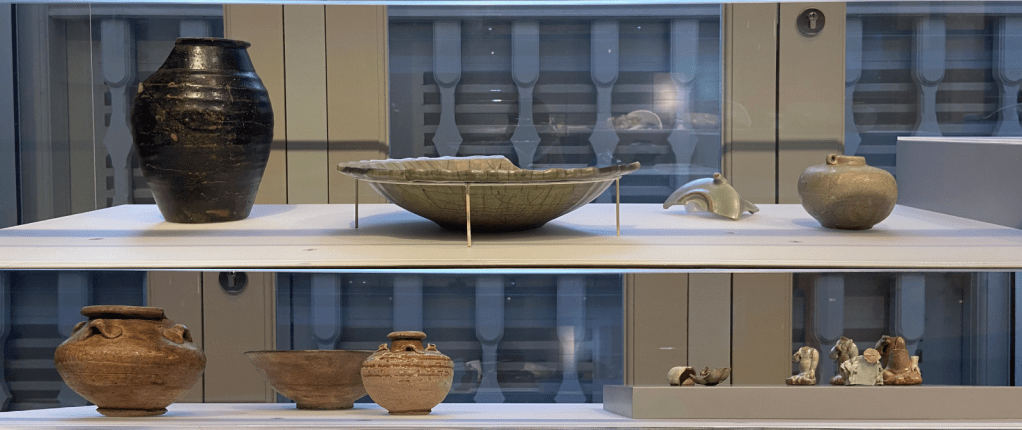
Going through historical records, there have been many gaps in the timeline of the world, with no record of how lives were lived, and these artefacts and paintings provide a deep insight into the history of South-East Asia and Asia in general.
The 2nd level of the Asian Civilisations Museum will be covered in another article, and that delves into the many different religions present throughout Asia.
 Sims Avenue