Finding new and deeper meaning
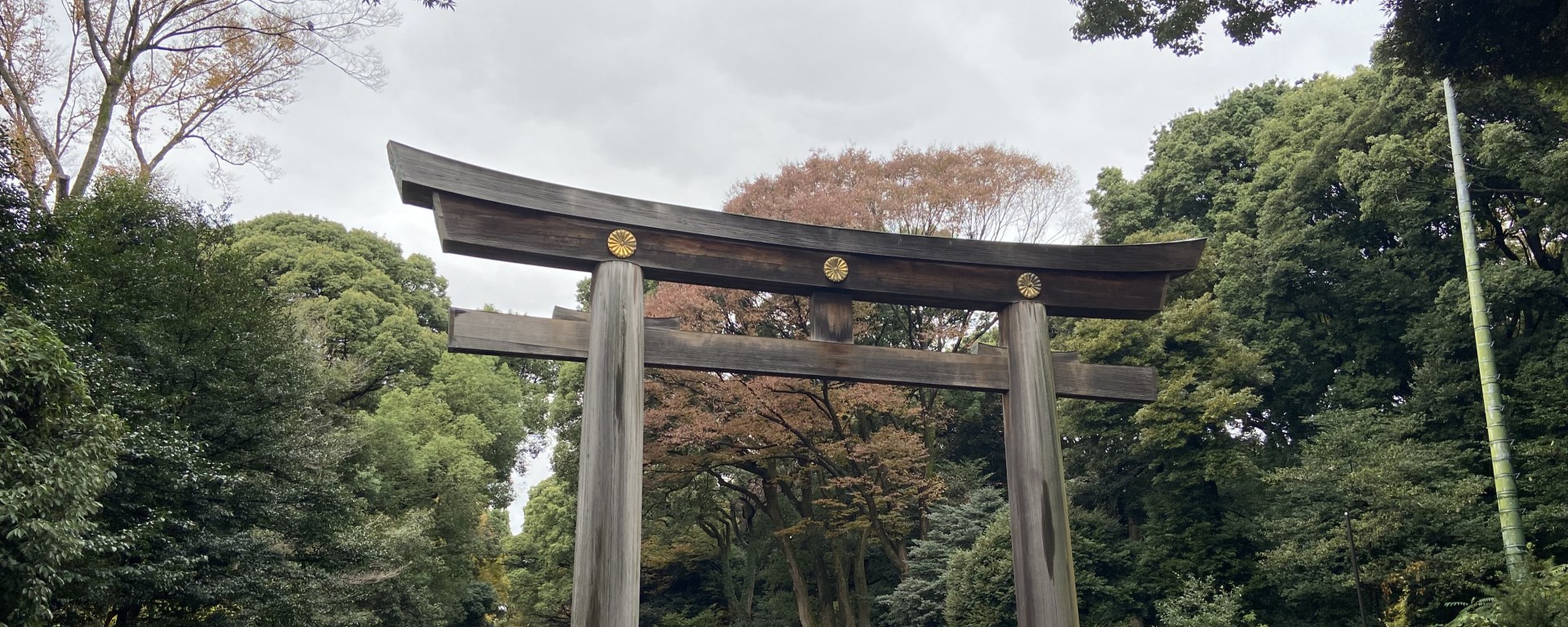
One thing everyone knows about Japan is the number of shrines, with the famous ones being the Fushimi Inari Shrine (伏見稲荷大社) in Kyoto and Meiji Shrine (明治神宮) in Tokyo.
So what are shrines and why are there so many? It is believed that each shrine has at least one spirit that is enshrined, addressing a specific situation for an individual. For example, the Inari, the god of rice, and his messenger, the fox is enshrined in Fushimi Inari for people to pray for a good harvest.
We will cover some shrines which are less well known in Tokyo, but are relatively famous to the locals.
- Kanda Myojin (神田明神) – near Akihabara
- Yushima Tenmangu (湯島天満宮) – near Ueno-Okachimachi
- Atago Jinja Shrine (愛宕神社) – near Tokyo Tower
- Nezu Shrine (根津神社) – Nezu district, famous for its torii gates
- Togo Shrine (東郷神社) – near Harajuku
If you want to know how to pray at a shrine, the directions are well explained here. Also, if you are in Japan across the new year, it is a must to visit a shrine at midnight on New Year’s Day to experience the true Japanese culture
#1 Kanda Myojin (神田明神)
As per the name, Kanda Myojin in located in Kanda, Chiyoda ward. People who come here usually pray for prosperity and marriage.
How to get there: 7 minutes by foot from Ochanomizu (served by the Marunochi subway line and the JR Chuo line). Alternatively, you may consider stopping at Akihabara which has better train connectivity (served by the Hibiya subway line and the JR Yamanote line).
Opening hours: 24 hours
Kanda Myojin has 3 spirits enshrined. Ōkuninushi, the god of earth and Sukunabikona, the god of onsen, agriculture and healing which are mythological, and Taira no Masakado who led the first Japanese rebellion against the central government in Kyoto in the 930s.
When reaching the shrine itself, I was surprised that there were quite a number of people on a rainy Sunday night.
After entering the torii gate that marks the entrance to the shrine, you will come across the Zuishimon (隨神門), which is typical of more famous shrines, as there is additional cost and additional land space required. If you have been to Senso-ji in Asakusa, you’ll note that the structure is very similar with shrine guards on the left and right of the entrance.

The lights were also breathtaking considering we were there around 9pm.

#2 Yushima Tenmangu (湯島天満宮)
Despite being in Tokyo a number of times, have never heard of (much less been to) Yushima district, which is located directly north of Kanda.
How to get there: 2 minutes’ walk from Yushima subway station, which is only served by the Chiyoda line. It is also a 6 minutes’ walk from both Ueno-Okachimachi subway station (Oedo line) or Ueno-Hirojoki subway station (Ginza line). If you are at Kanda Myojin, it is about a 10 minutes’ walk away.
Opening hours: 6AM to 8PM, but you will still be able to pray.
While not as large in stature as compared to Kanda Myojin, many people come to this shrine to pray for their studies (or parents on behalf of their kids), as the spirit of Michizane Sugawara, a scholar (no, not the same one from Jujutsu Kaisen). Maybe I would have done better in school if I knew about this earlier.
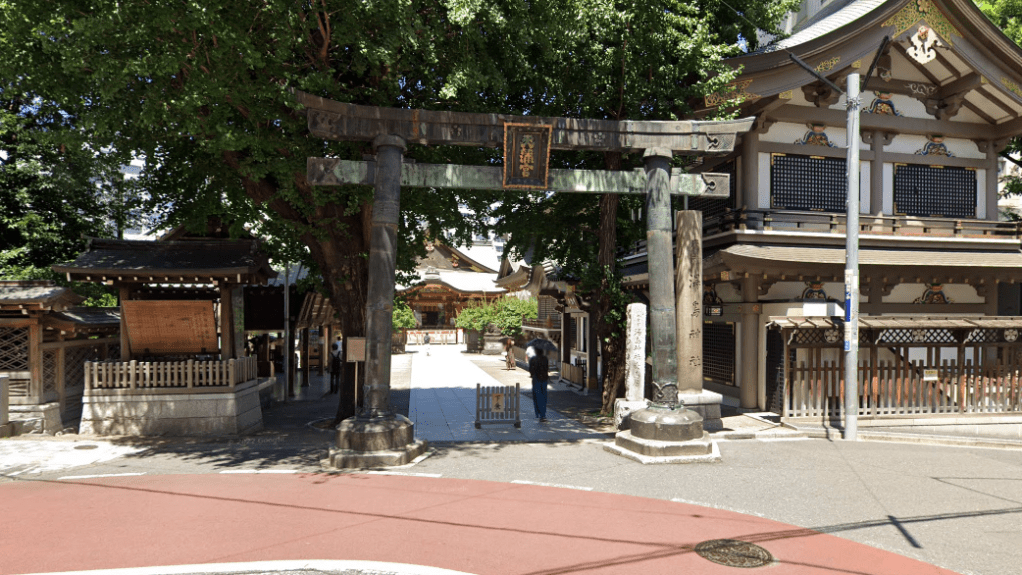
With the rain happening on a Sunday night as I visited both Kanda Myojin and Yushima Tenmangu in the same evening, missed out on the photo at the entrance of the shrine, which is taken from Google’s street view below.
Reaching there after dinner just after 8PM, the shrine itself was closed up, but the offering box is still available. As a tourist, knowing the reason why people come here to pray gives it much deeper meaning.

#3 Atago Jinja Shrine (愛宕神社)

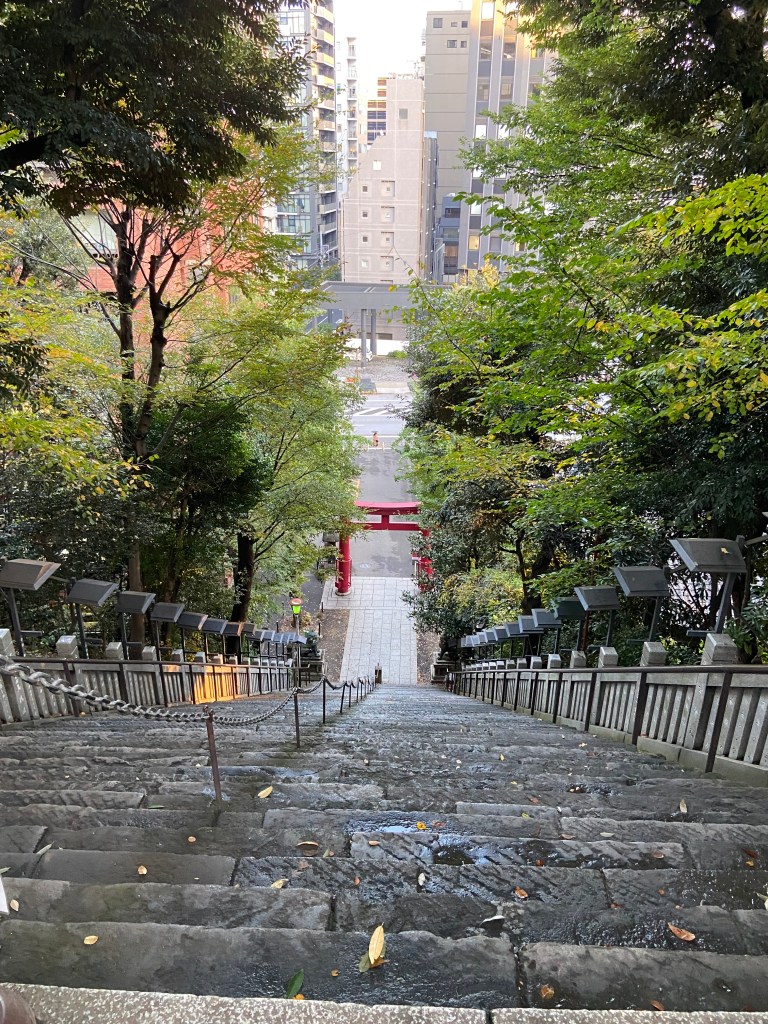
In the same vein as Yushima Tenjin’s success in studies, you can also head to Atago Jinja to experience success in life. This is because access to Atago Jinja requires you to climb up via the Success Steps. Legend has it, a famous samurai Magaki-Heikurou rode a horse up and down the steps, got a promotion and thereafter he has succeeded in life.
Having climbed up the steps myself, I can testify that after you climb up these steps, you actually feel that you achieved something in life, especially when you see people in their 60s managing it well.
How to get there: 5 minutes’ walk from Toranomon Hills or Kamiyacho subway station (Hibiya line). Alternatively, Toranomon subway station (Ginza line) is less than 10 minutes away. Location here.
Opening Hours: 930AM to 5PM
The shrine itself was established by Tokugawa Ieyasu. If you are familiar with Japanese history, he was the first shogun of the Tokugawa Shogunate during the Edo period, the period preceding the restoration of the powers of the emperor in 1868.
There are 4 spirits enshrined here, with the main one being the Homusubi-no-mikoto, the God of fire. Prior to the skyscrapers being built, this was one of the highest places in Tokyo during the Edo period and was a location to monitor any fires breaking out.
At the top of the Success Steps, you will see the main shrine which is relatively unassuming. One point that you’ll note is the amount of nature at this shrine compared to others, which also has a koi pond to the right of the entrance.

#4 Nezu Shrine (根津神社)
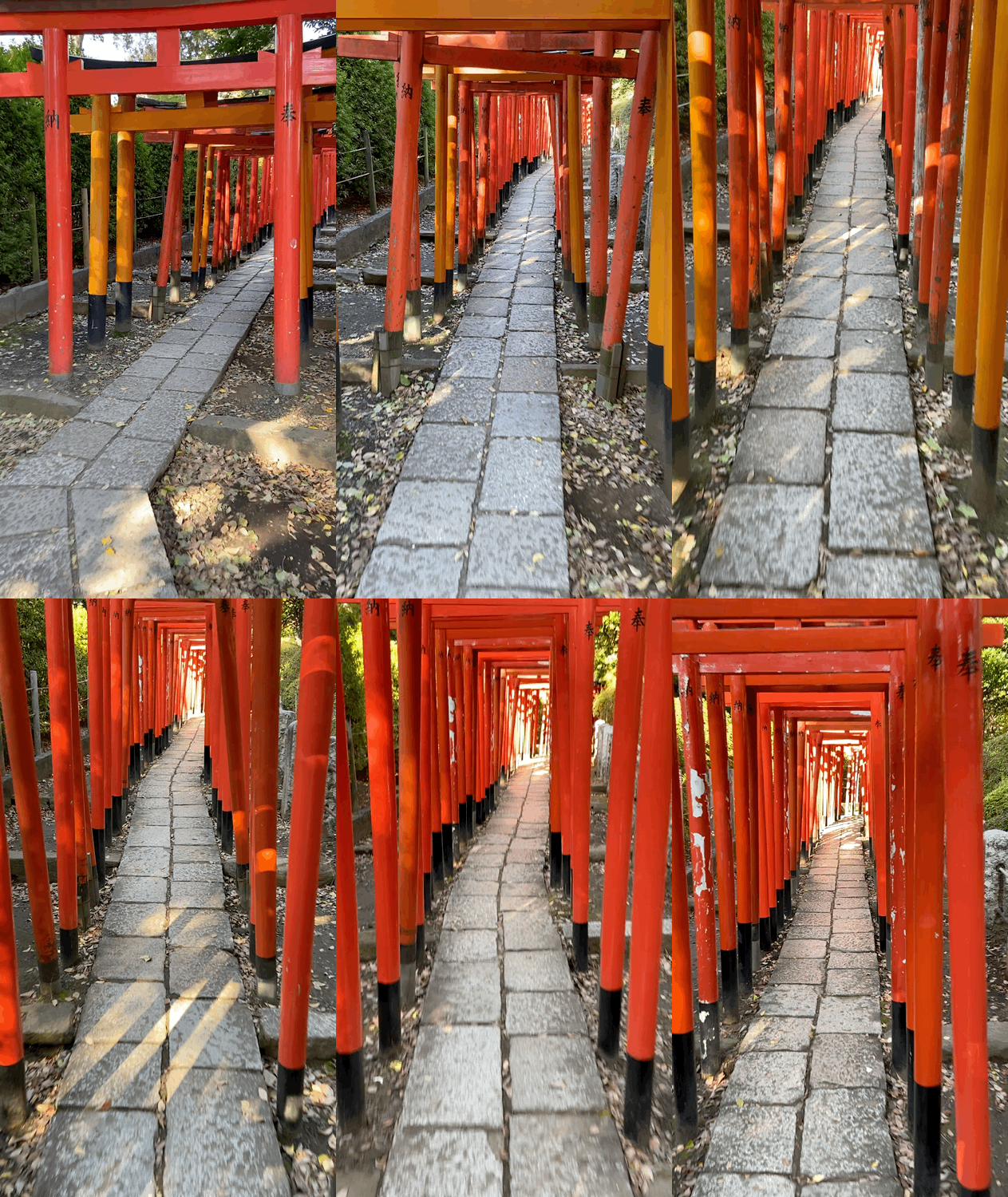
Nezu Shrine is located in Bunkyo Ward, which is the same ward as Yushima Tenmangu. One of the reasons why tourists visit this shrine is the multiple torii gates located within the grounds (Otome Inari Shrine), bringing the Fushimi Inari experience to Tokyo. It is a scaled down experience of course.
How to get there: While being located in the same ward as Yushima Tenmangu, it is not within walking distance. Nearest subway stations are Todaimae (Namboku line) or Nezu (Chiyoda line), which are within 10 minutes by foot.
Opening Hours: 6AM to 5PM
Being one of the main shrines of Tokyo, the entrance via the Front Approach (表参道口) indicated in the map above is grandiose as compared to many other shrines you see in Tokyo.

As you enter the grounds, you will be greeted by the Zuishimon (隨神門) similar to Kanda Myojin, further evidence that this is one of the more famous shrines. Additionally, the lush greenery around the shrine grounds is pretty delightful.


There are 4 deities enshrined here, including Susanoo (yes, similar to the Susanoo from Naruto), a god warding off evil, and Hondawake, the god of victory. People come by here to pray for better luck generally in life.
Off to the left side of the Zuishimon is where you will find the red torii gates similar to Fushimi Inari shrine in Tokyo. This is a separate shrine, Otome Inari (乙女稲荷) shrine, that is located within the grounds of Nezu shrine, and is dedicated to the same god as the Fushimi Inari shrine.
You may choose to walk through the torii gates, but taller people, please be careful as the headroom clearance is pretty low. If you do hit your head, go back to Nezu shrine proper and pray harder.


#5 Togo Shrine (東郷神社)
Depending on your views, this shrine may be a bit controversial. The spirit of Marquis Togo, a celebrated admiral in the Navy who led Japan to victory in the Russo-Japanese war of 1905 in enshrined here. History buffs will note that this war was the first victory of an Asian nation over a Western power. Thus, many people come here to pray for victory in any of their specialised fields.
Putting any views about war aside, this shrine was interestingly located next to Harajuku’s Takeshita Street. As I was walking through Takeshita Street, I did not expect to come across such a calm and peaceful environment right next door.
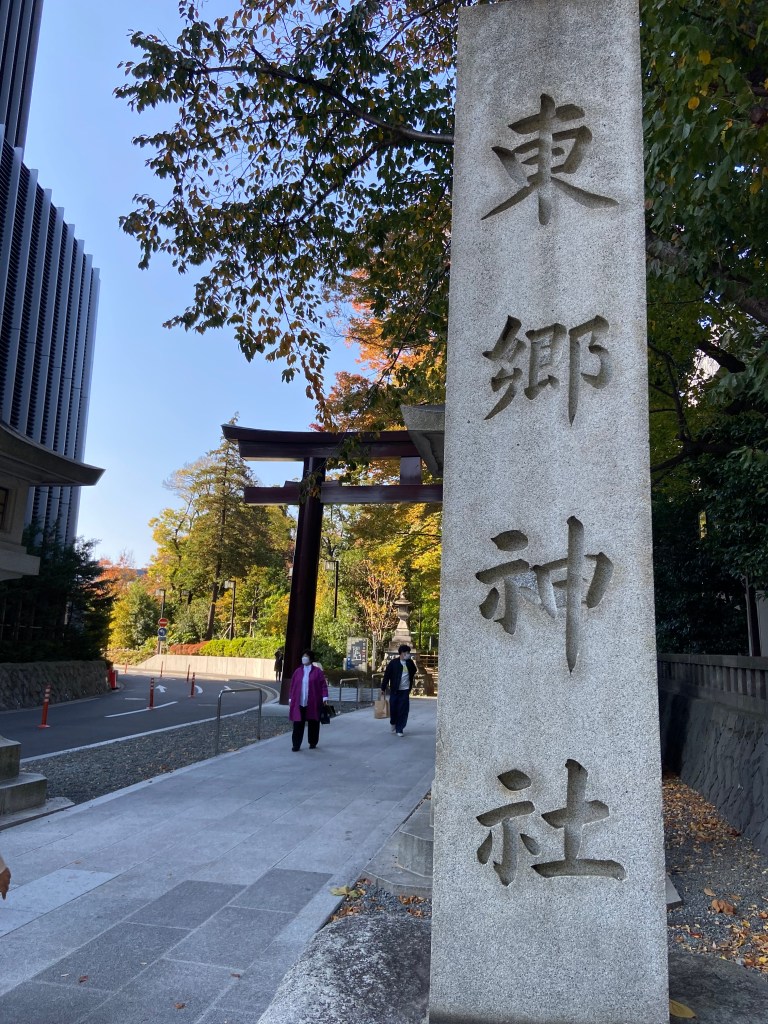
How to get there: About 10 minutes’ walk from either Harajuku JR Station (Yamanote line) or the Meiji-Jingumae subway station (Chiyoda line and Fukutoshin line).
The other option which may be shorter would be to enter midway through Takeshita Street, instead of taking the long way around to the Front Approach. The entrance is halfway along the street – you’ll see crepe stalls in an alley and a public restroom.
Opening hours: 630AM to 5PM

Upon reaching the shrine proper, you’ll notice that unlike other shrines covered above, it is unabashedly concrete in nature. The shrine was burnt down during World War 2 and was only rebuilt in the 1960s. Despite a differing design from other shrines above, the Japanese elements are clearly retained.
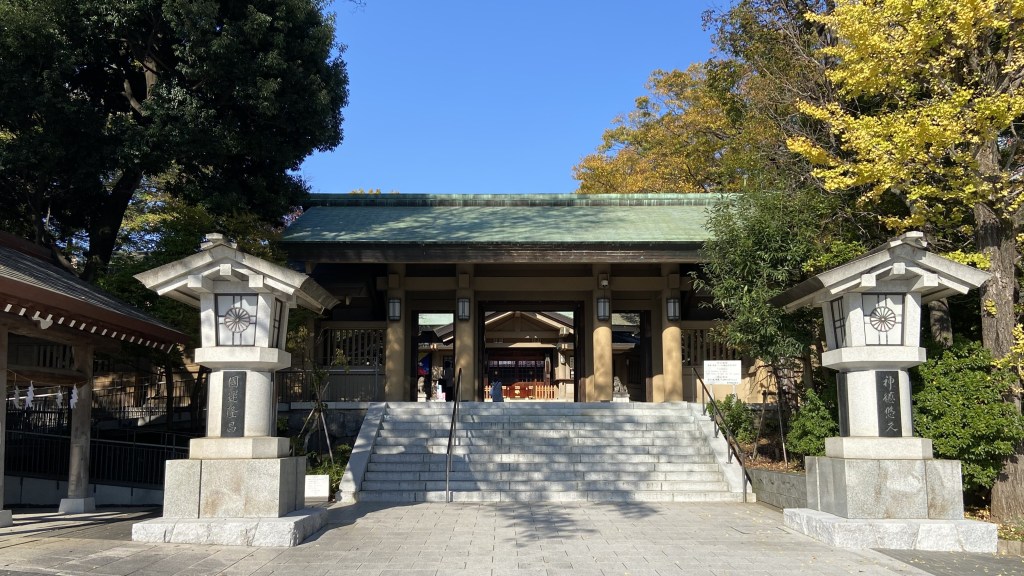
When you’re done touring Togo Shrine, there are two options, either exit towards Takeshita Street, or if you are up for it, you may take a not-so-short 20 to 25 minutes stroll to Jingu Gaien to catch the leaves – it is really popular on weekends.

Hope the journey through the various shrines would be interesting to you. While prayers help, remember to always be kind and let the world do the rest.
 Sims Avenue